AI-Powered Social Media Reputation Guard: Scan, Detect, Protect
Almost everyone has social media accounts. Most people have no idea what is still out there with their name on it — old posts, tagged photos, comments from years ago. Recruiters search social media before making hiring decisions. Journalists do it before publishing. Schools, clients, and partners do it too. I led product design for a platform that uses AI to scan your history and protect what you publish next — giving people back control over how they appear online before someone else decides for them.
Project summary
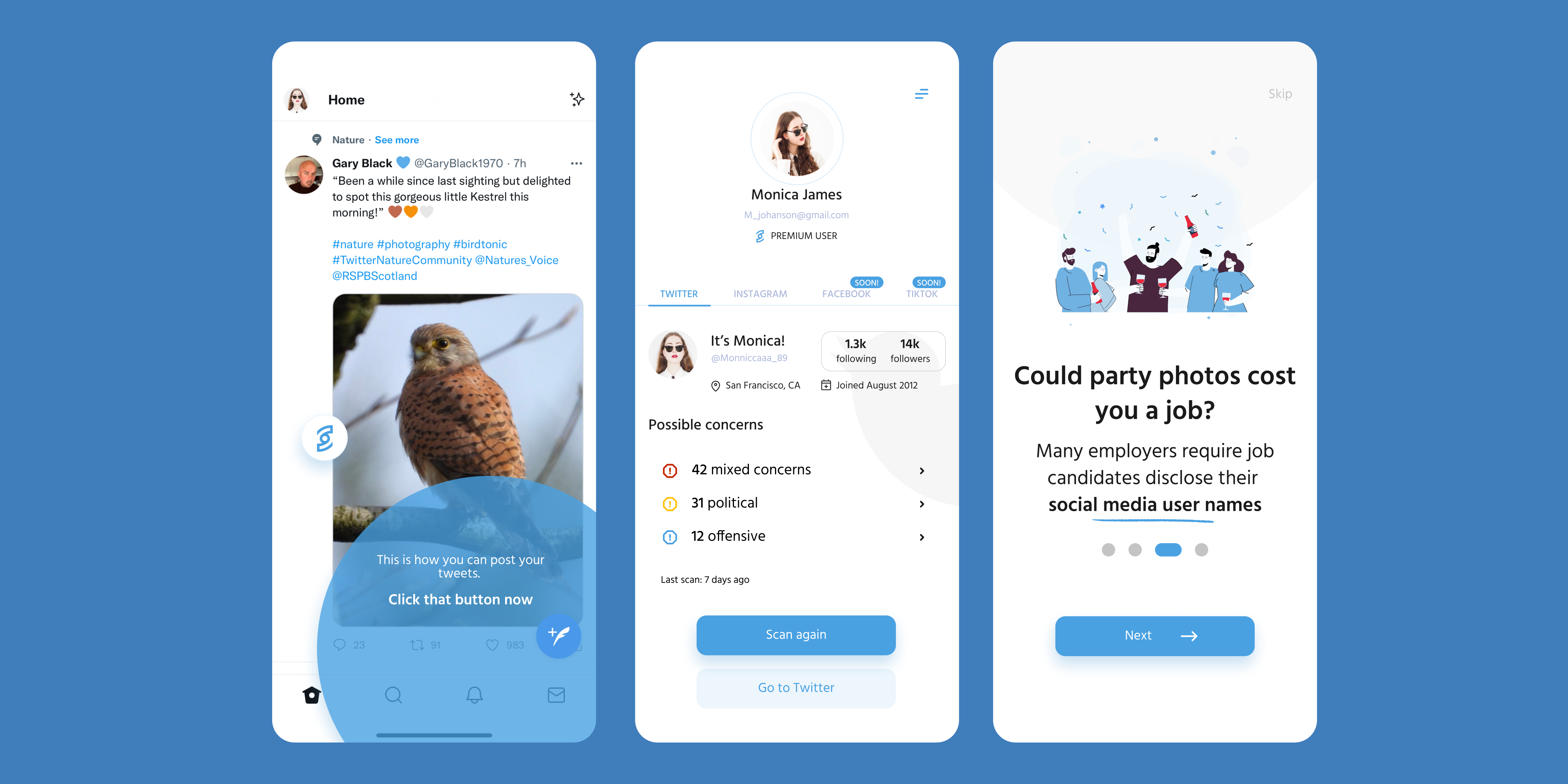
The main screen of the mobile app — the starting point for scanning your social media history and managing what comes up when someone searches your name.
Overview
We publish content en masse. Sometimes that content is beyond our control — friends and family publish photos from parties, events, and situations that put us in a bad light. Do we remember all those photos published 5, 10, or 15 years ago where we are tagged? All our posts, comments, retweets, and shared content?
This product is a direct response to that reality. Algorithms and AI detect content on social media that is harmful, inappropriate, or potentially damaging to a user's reputation. And it works both ways: it covers the past by scanning existing content, and protects the future by checking content before it is published.
Problems
Content beyond your control
Friends and family tag you in photos from events, parties, and situations that can damage your reputation — and you may not even know it happened.
The past never disappears
Posts, comments, and shared content from years ago are still public, searchable, and attributable. Most people have no idea what is still out there with their name on it.
Publishing without a safety net
Every time you post something on social media, there is no moment of review — no check between intent and consequence. One poorly judged post can have lasting professional or personal impact.
Opportunity
What if AI could scan your entire social media history and catch harmful content before it reaches an audience — automatically, in the background?
What I learned
Building a design system used across multiple teams and platforms taught me how important naming, consistency, and component logic really are — not just for visual coherence but for dev team velocity. I also discovered the value of magic links during a login redesign challenge: reading documentation and talking directly with engineers led to a better design than anything I'd have arrived at on my own.
The team & my role
Lead designer
I led product design across both the Web App and Mobile App — responsible for end-to-end design delivery in parallel sprints to two development teams.
Design team
The team included two designers and one UX designer. I was the lead across both platforms, coordinating design decisions and component output.
My focus
Design system creation, core user flows, onboarding, AI scan & report UX, real-time pre-publish check, content deletion flows.
Design system first
When I joined the team, an MVP was already live. Before touching any screen designs, the first thing I did was build a design system — because without it, delivering consistent work across a website, web app, and mobile app in parallel sprints would have been impossible.
The company was using blue across all products. I kept blue, but repositioned it as a secondary accent rather than the dominant color. Backgrounds became white to increase contrast and create more visual breathing room — giving users space to focus on the actions that mattered, rather than competing with heavy UI chrome.
In Figma, I built out components covering buttons, input fields, validation states, alerts, and more. This wasn't just a design artifact — the React dev team adopted it directly, which sped up implementation and reduced back-and-forth. A shared language between design and engineering made everything faster.
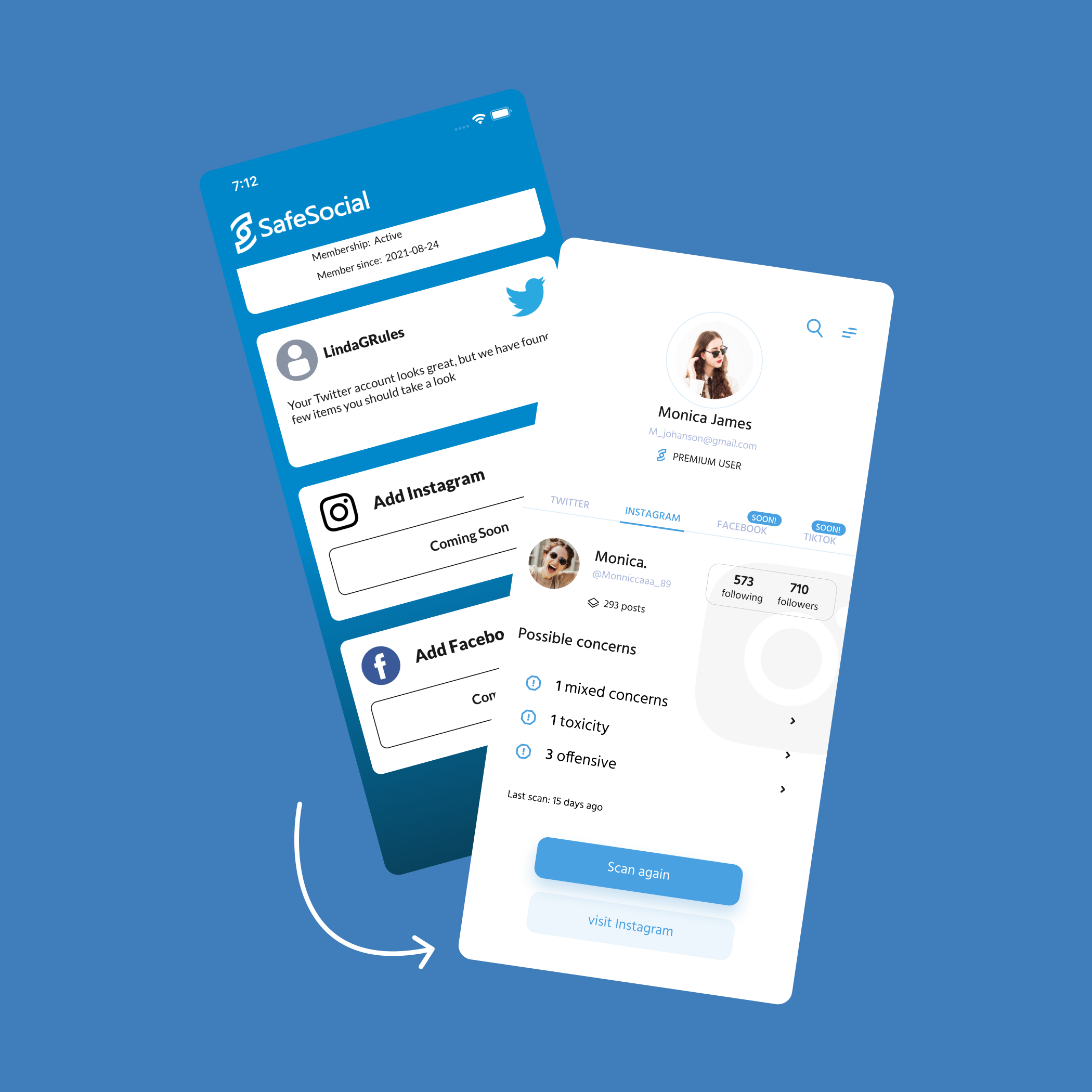
How the product works
The flow was designed to feel effortless — because if scanning your entire social media history feels like work, people won't do it.
Mobile App — for individuals
Register or log in via magic link, Apple ID, Google, or Twitter. Connect social accounts. Hit Scan — AI generates a report of harmful or inappropriate content, grouped by category (political, offensive, religious, and more). Delete items one by one or wipe everything at once. From that point on, every post you try to publish is checked before it goes live.
Web App — for organisations
A mirror of the mobile experience, extended with team-level monitoring tools. Built for companies, brands, media houses, families, and athletic departments that need to monitor and protect the social media activity of groups — preventing harmful actions before they happen.
Real-time pre-publish protection
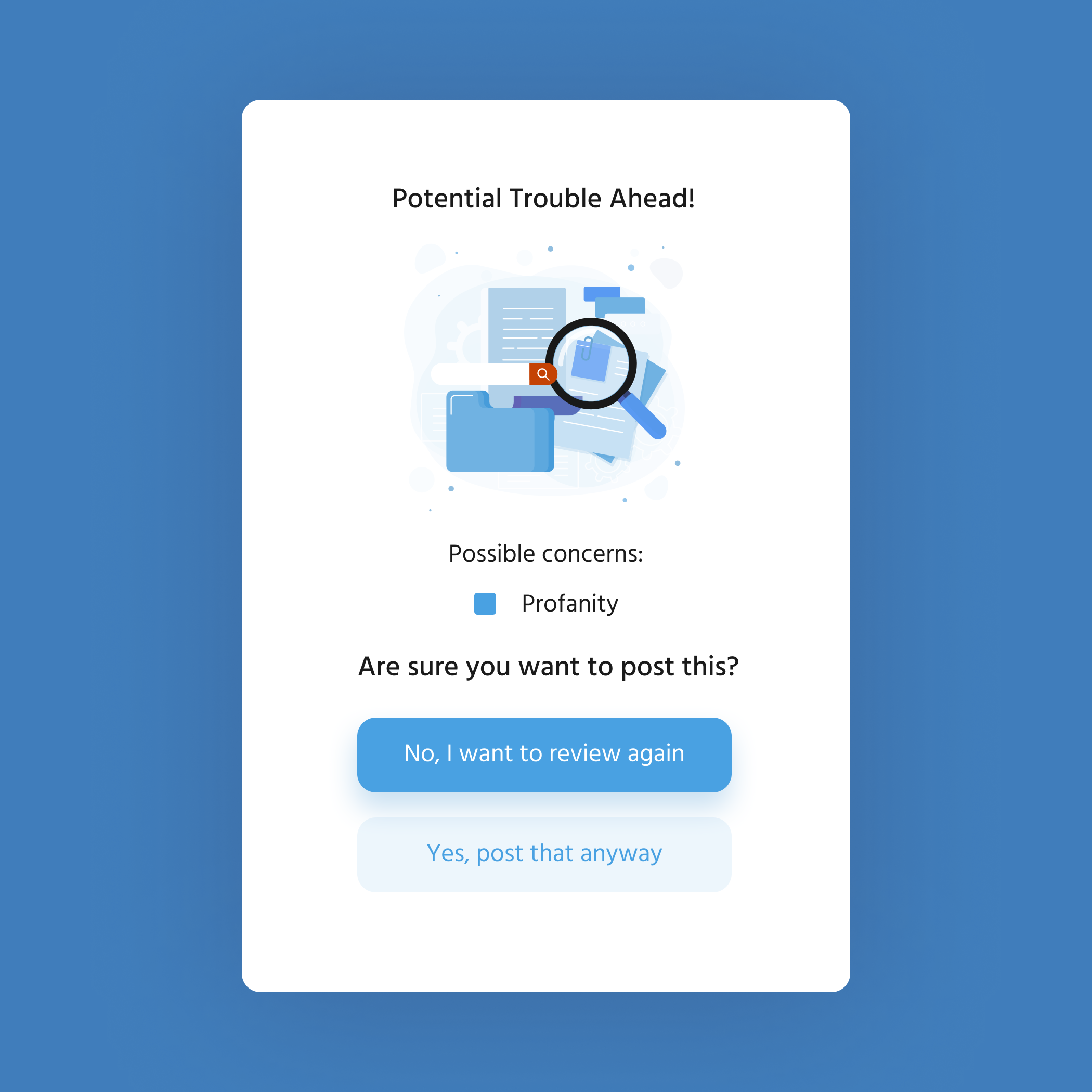
When a user wants to tweet something, they hit send — and the app intercepts, scanning the attached media and message before anything goes live. If something is flagged, the user is prompted to edit or delete before publishing. A moment of review between intent and consequence.
Deliverables
- Design system in Figma covering buttons, fields, validation, alerts, and core UI patterns — adopted directly by the React dev team
- Onboarding & authentication flows (magic link, Apple ID, Google, Twitter) for both mobile and web
- AI scan & report UX — content grouped by category, with single-delete and bulk-delete flows
- Real-time pre-publish content check for linked social accounts
- Organisation dashboard for team-level social media monitoring (Web App)
- Sprint-based delivery in parallel to web and mobile development teams
What I learned
- A design system used by multiple teams is a product in itself. Naming conventions, component logic, and documentation matter as much as the visual decisions — maybe more.
- Magic links taught me the value of reading documentation and talking directly with engineers. The better I understood how the technology worked, the better the design became.
- Delivering in parallel to two teams forced real discipline around component reuse, sprint planning, and knowing when a decision needed to be locked vs. left flexible.
- Designing for AI-driven features means designing for uncertainty — users need to understand what the system did, why, and what they can do next. Trust is built through transparency.
See also
Other projects you might find interesting
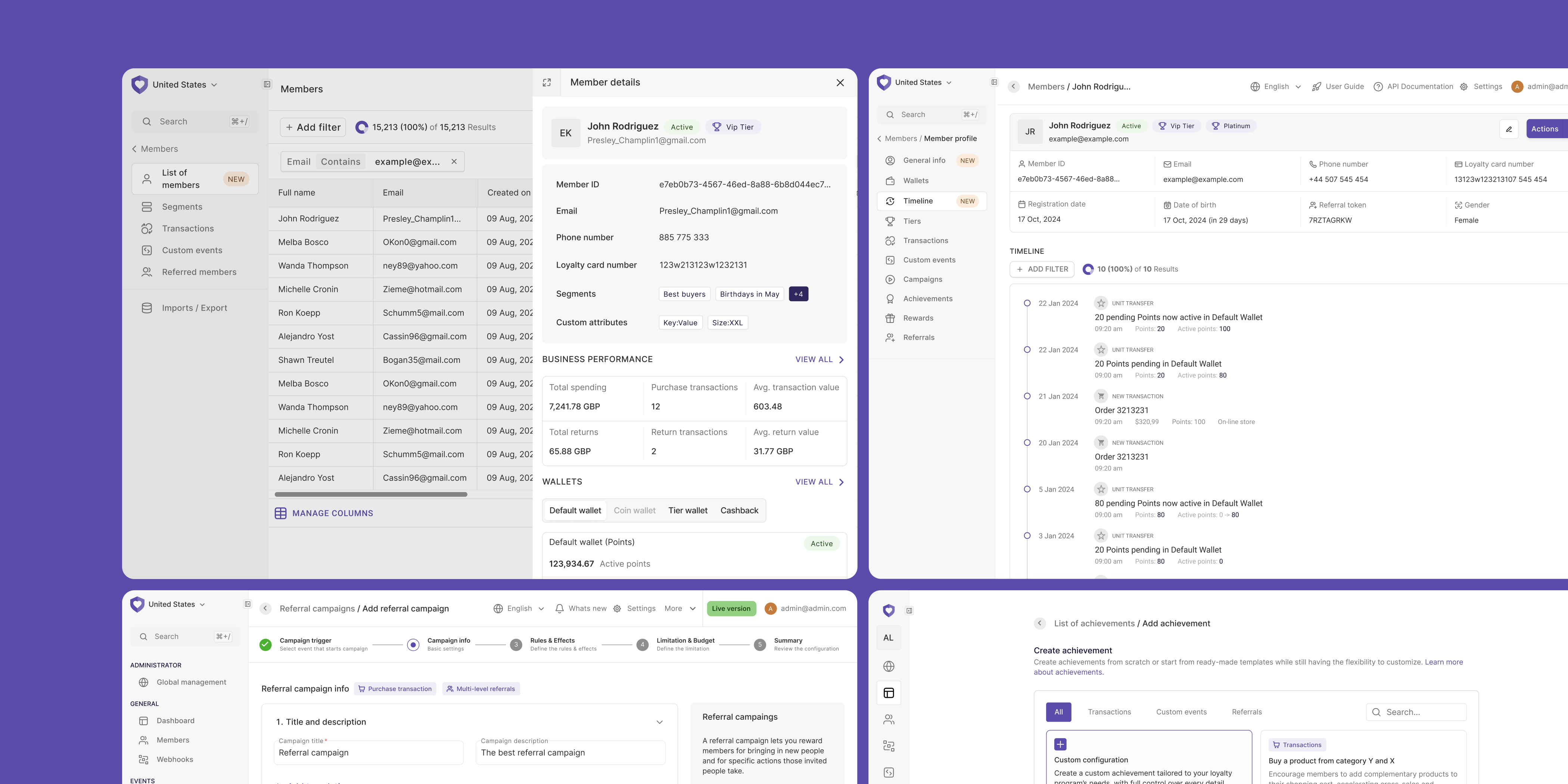
Turning a complex loyalty platform into something people actually enjoy using
Scaling one waste management product into multiple municipality-branded apps.
IoT HealthTech: Digitizing Pain Management with a Squeeze-to-Record Ecosystem
🍪 This site uses cookies
I use Hotjar and Google Analytics to understand how people use this portfolio. No data is sold or shared with third parties beyond these tools.